





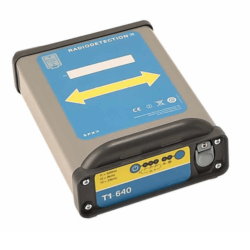
SuperCAT4+ Pipe Cable Locator
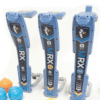
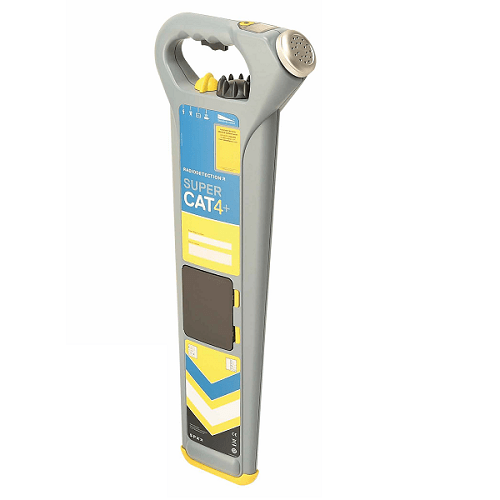
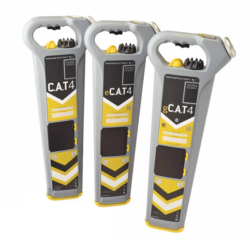
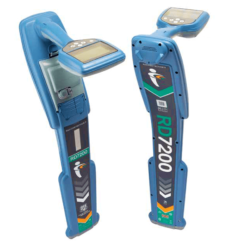
SuperCAT4+ Cable Avoidance Tool.
Range of locators and transmitters designed to target specific buried assets.
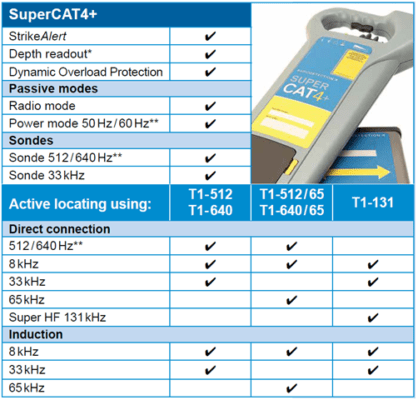
Buying Guide: Identify your application. 2. Choose a suitable locator and T1 transmitter. You may opt for additional accessories for your locating needs. See the configuration options table below for reference.
| ADD ON: |
| + More Locator Accessories |
Product successfully added to the Quote List
SuperCAT4+ Cable Avoidance Tool for Ground Work Contractor
The SuperCAT4+ range of locators and transmitters are an expansion from the earlier Radiodetection’s C.A.T family.
With a wide selection of passive, sonde and active frequencies designed to target specific buried assets, it is a must have tool for contractor dealing with underground work. It is a simple tool yet give operators the feature needed and with minimal training.
SuperCAT+ Configuration Options: 
Locate pipelines protected by a Cathodic Protection
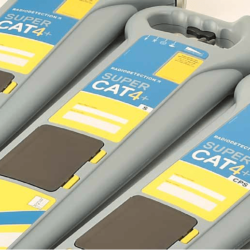
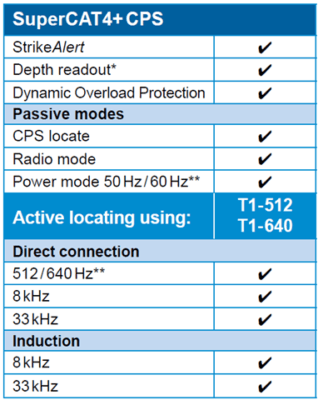
SuperCAT+ CPS
Tailored with CPS feature, the SuperCAT+ CPS is suitable for oil and gas pipes using a Cathodic Protection System. The CPS model can locate the rectified signal without needing an additional transmitter.
Find water and drain pipes
SuperCAT+S
The SuperCAT+S model are designed to locates a range of sonde frequencies that can be a challenges when finding water or drain pipes. A lower frequency sonde is useful to trace deep cast-iron pipes. Higher frequency sondes can be easier to distinguish in an electronically noisy urban environment.
Detect a broad range of utilities
SuperCAT4+ can be used to locate a comprehensive set of active frequencies to support the detection and tracing of different cable types in varied environmental conditions. Higher frequencies such as the 131kHz or 65kHz can be used to find well-insulated utilities such as twisted-pair telecom cables or insulated pipe joints. For long range locating of lower resistance cables, such as power lines, lower frequency options are available.
For more information on how a cable and pipe locator works, please refer to our Theory On Locating Buried Pipe guidance link here.
| SuperCAT4+ | 10/SuperCAT4+, 10/SuperCAT4+S, 10/SuperCAT4+CPS, 10/T1-SUPERCAT4+131, 10/T1-SUPERCAT4+640, 10/T1-SUPERCAT4+640/65, 10/T1-BAG |
|---|
Features
- Safety Built-In
- Dynamic Overload Protection
- Dig more safely with StrikeAlert™
- TruDepth™
- Real Sound
Application
Locate pipelines protected by a Cathodic Protection System
|
|
|
|
|
|

Methodology
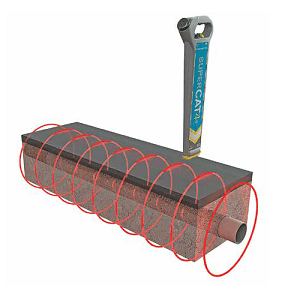 Detecting CPS SuperCAT4+ CPS models are optimized to detect CPS signals to allow tracing of protected pipelines without disconnecting rectifiers.
 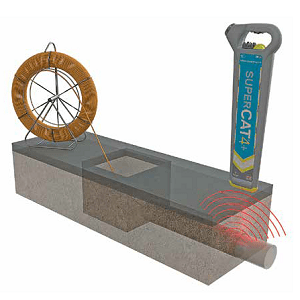 Detecting Sonde Sondes enable non-metallic pipes to be accurately traced, depth determined and the position of blockages accurately identified.
 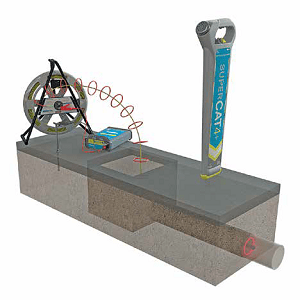 Detecting Flexitrace Connect the T1 to a Flexitrace to radiate a continuous tracing signal from non-metallic pipes and conduits.
 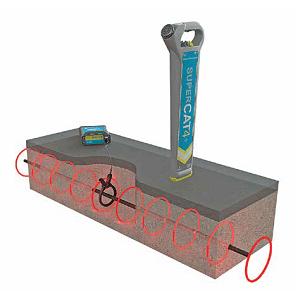 Signal Clamping Safely apply a T1 signal to a pipe or live cable up to 125mm/5” diameter without interrupting the supply.
 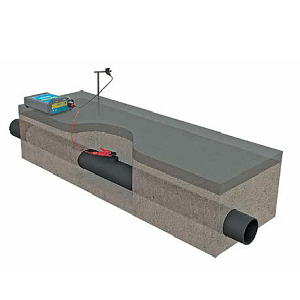 Direct Connection The most effective method for connecting to a valve, meter, junction box or other access point, as long as access is possible.
 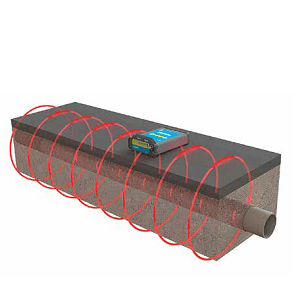 Induction Conveniently apply a transmitter signal to a pipe or cable when, direct connection or signal clamping is not possible.
 Download
SuperC.A.T4 Brochure V4 (2MB)
SuperCAT4 International Userguide (2.4MB)
SuperC.A.T Declaration of Conformity (354KB)
T1 Transmitter Declaration of Conformity (441.7KB)
Related products
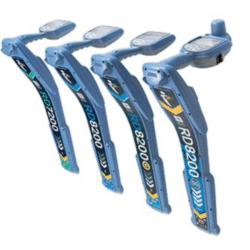
Pipe Cable Locator
Pipe Cable Locator
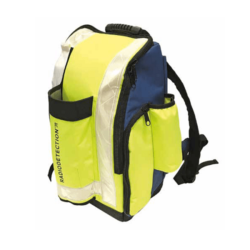
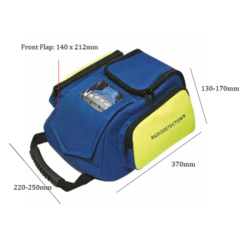
Locating Accessories
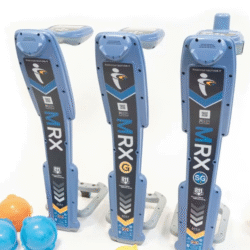
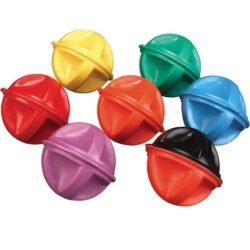
Pipe Cable Locator
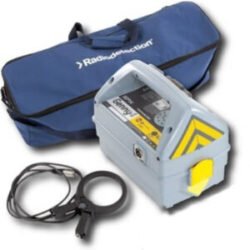
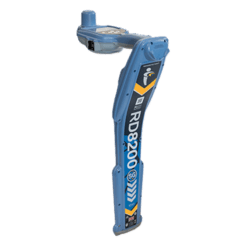
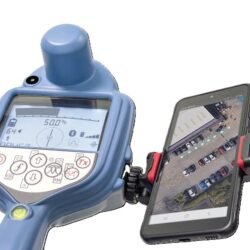
Pipe Cable Locator
Pipe Cable Locator
